
Health - Reader Story
I Rested My Elbow For Six Weeks Like The Doctor Said. I Came Back Worse. Then I Got Angry Enough To Find Out Why.
A tennis player's account, in his own words.
 Robert M.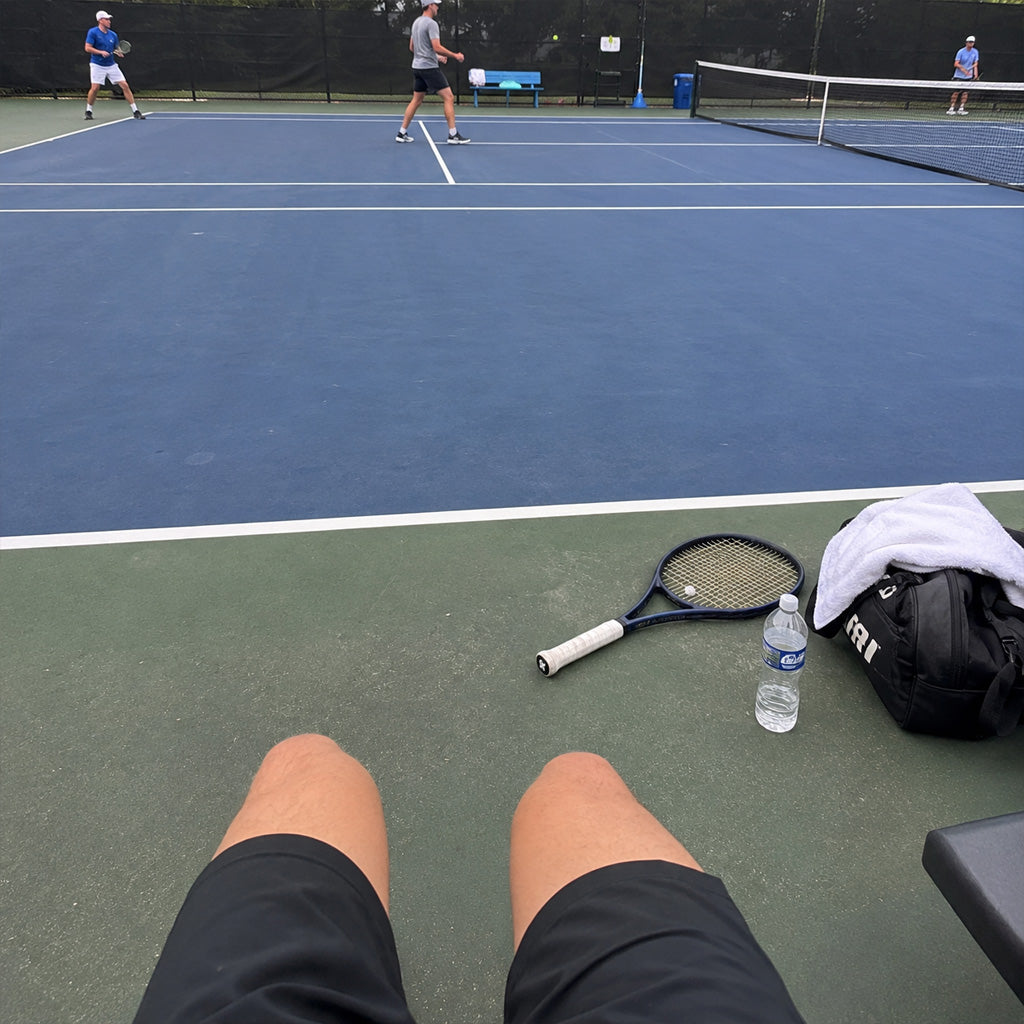
I want to tell you about the morning I almost quit for good, because if you’re reading this, I think you might be closer to that morning than you’re letting on.
It was a Tuesday. Tuesday is my group — same six guys, same courts, going on eleven years now. I got there early like always, and I couldn’t grip the racquet. Not “it’s a little sore.” I mean my hand wouldn’t close around it with any strength. I’d spent the previous six weeks doing exactly what I was told — resting, icing, wearing the strap — and my very first swing back, the pain shot down my forearm like I’d never stopped.
I made an excuse about a bad night’s sleep and I sat out. Again. And sitting there on the bench watching my friends play the game I’ve built my whole week around for a decade, I had this cold, flat thought: maybe that’s it. Maybe I just don’t get to do this anymore.
Nobody warns you which game is going to be your last one. That’s the cruelest part of this whole thing. It doesn’t come with a bang. It just quietly closes the door an inch at a time until one day you notice you’re on the wrong side of it.
I’m writing this because I found the other side of that door. And it turned out the reason I couldn’t find it for two years wasn’t my elbow. It was the advice.
How it started (you’ll recognize this)
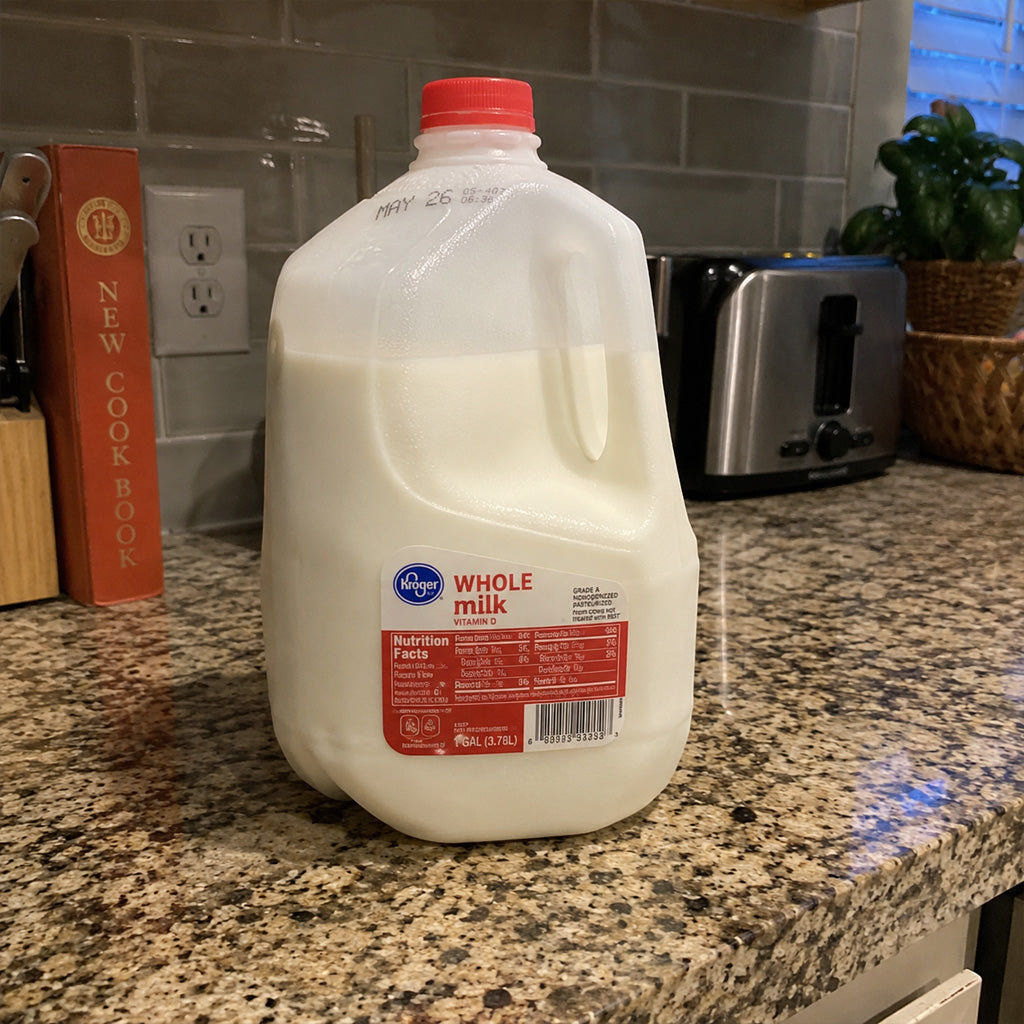
Mine didn’t start on the court, oddly enough. The first time it really scared me I was just holding a jug of milk, and my grip gave out — the gallon nearly went straight to the kitchen floor. Then it was doorknobs. Then shaking hands, which for a guy who does that a lot for work is its own quiet humiliation. You start turning your body so people shake your left. You develop little tricks so nobody notices.
That’s the thing I never see anyone say out loud: for a long time, the worst part isn’t the pain. It’s the hiding. Palming ibuprofen under the table at the clubhouse so the group doesn’t see. Making excuses. Pretending you’re tired when really you just can’t trust your own arm. You don’t want to become “the careful one” — the guy everybody starts playing gently around, the one who’s basically already a spectator with a racquet.
So you don’t tell anyone. You just quietly try to fix it yourself.
Everything I tried worked for a week, then failed
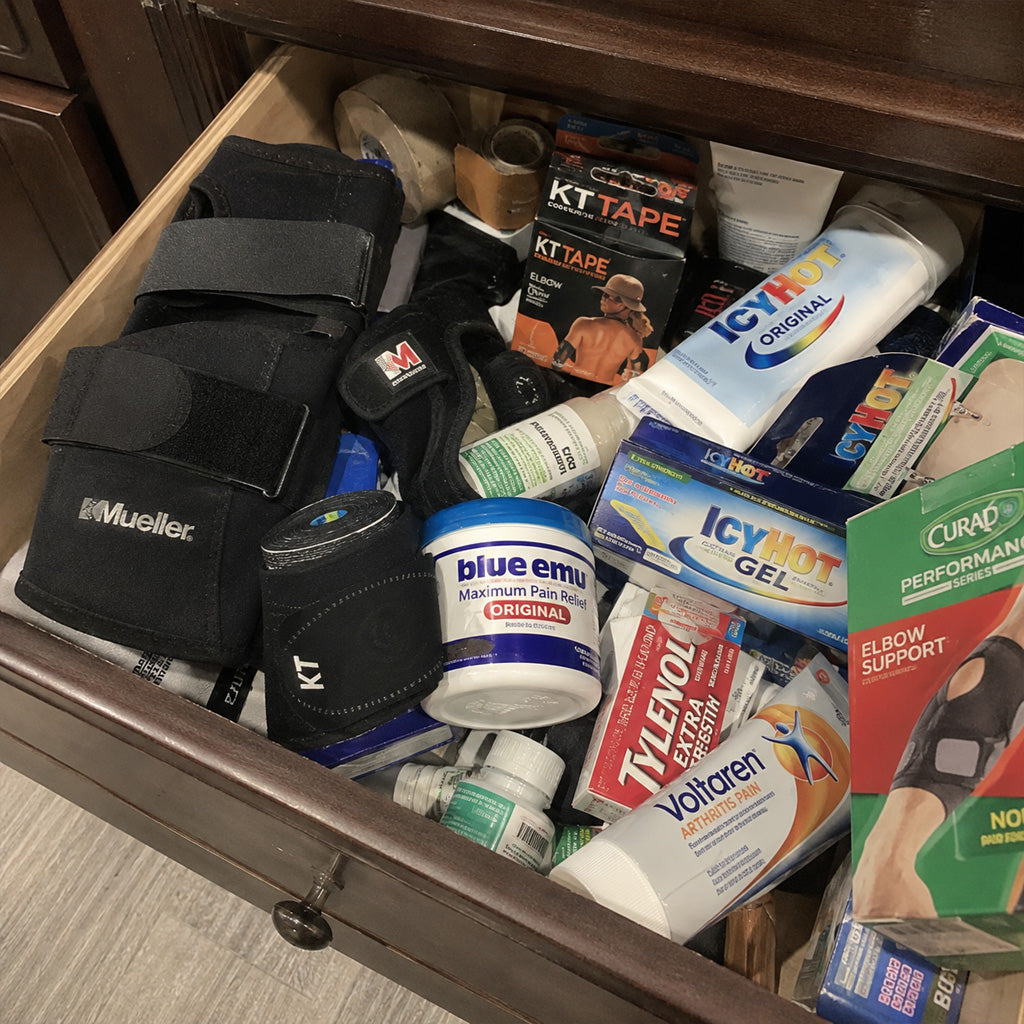
Here’s my drawer. I bet yours looks similar. I rested it — the number one thing everyone tells you. Came back exactly as bad. I iced it religiously; the ice only numbed it, honestly, and the second it wore off the ache was right back. Pharmacy strap that was supposed to take the pressure off the tendon: did basically nothing. Voltaren gel. KT tape. A compression sleeve. I did a stretch of PT that I frankly couldn’t afford to finish, and the moment I stopped, so did any progress.
Every single one of them followed the same script. A little relief, a flicker of hope, and then right back to where I started — sometimes worse. And every time it came back, the shame got a little heavier, because everyone treats this thing like it’s simple. “Oh, tennis elbow? Just rest it.” Like I was failing at something a child could handle.
That’s the story I was telling myself for two years: I’m failing. That story was wrong. And the day I found out why is the day everything changed.
The thing that finally made me angry
I got angry enough, after that Tuesday, to actually go digging. And I found two things that, put together, rearranged my entire understanding of what was happening in my arm.
The first: what I had almost certainly wasn’t inflammation at all. The chronic, nagging, comes-back-every-time kind of elbow pain isn’t the tissue being inflamed and angry — it’s the tissue being worn down. One clinic explained that these painful tendons “do not actually become inflamed, but rather their cellular structure breaks down over time.” It’s a starved, broken-down piece of tissue that isn’t getting what it needs to rebuild.
The second is the one that made me put the phone down. The whole “rest it and ice it” gospel comes from a doctor named Gabe Mirkin, who coined RICE in a bestselling book in 1978. And decades later, he publicly took it back:
“Now it appears that both Ice and complete Rest may delay healing, instead of helping.”
— Dr. Gabe Mirkin, who coined RICE in 1978
The man who invented the advice I’d followed for two years had personally reversed himself on it. And nobody had told me. I wasn’t failing. I’d been handed the wrong map.
The part where my own body had been right all along
Once I understood that tendons “have reduced blood supply and poor circulation, so they heal very slowly,” the whole thing snapped into focus. A starved tendon needs blood flow to rebuild. Rest slows blood flow. Ice shuts it off. So the two things I’d been doing most faithfully were the two things guaranteeing my tendon stayed starved. I’d been putting a hungry man on bed rest and wondering why he wasn’t getting stronger.
And here’s what wrecked me: my own arm had been telling me this the entire time. Worst in the morning, cold and stiff. Best after I’d warmed up. Warm and moving, my arm worked. Cold and rested, it seized. I’d been overruling my own experience with an ice pack. Heat opens the flow. As the Mayo Clinic puts it plainly, “heat can boost blood flow, and that may help the tendon heal.” That wasn’t a sales pitch. That was the explanation for my own last two years.
What I do now
I stopped hunting for a cure — I don’t believe in those anymore, and if you’ve read this far, neither do you. I just needed the simplest possible way to get real, deep heat into that joint, before I play and after.
I tried a heating pad first, and it did almost nothing — a pad warms your skin and quits about an inch down, and the tendon that’s actually hurting sits deeper, wrapped around the joint. Right idea, wrong tool.
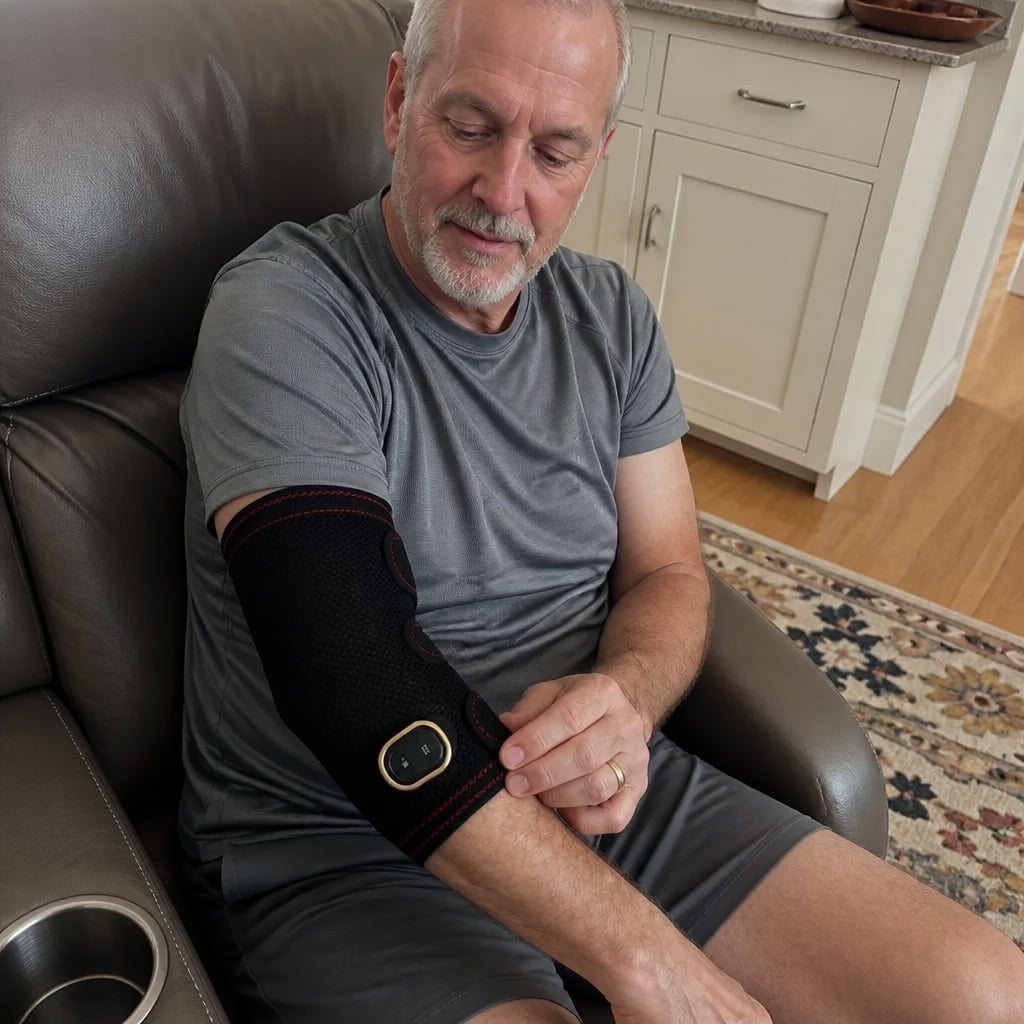
What actually worked for me was a proper heated wrap — the Stowce Heated Elbow Brace. It’s not a heating pad and it’s not a medical device. It uses fast-heating carbon-fiber wire to drive heat deep into the joint instead of just warming the surface, with a gentle vibration mode that adds a second push to circulation. I put it on to warm up before my group, and I wear it after to keep the blood moving while everything recovers. It supports the blood flow, warms and preps the tissue, and takes the stiffness down enough that I can actually move.
I’m not going to oversell it, because being oversold is half of what burned me for two years. All I’ll tell you is what it gave me back. I’m on court Tuesday mornings again. I shake hands with my right hand and don’t do the math first. I carry the milk with one arm. And nobody in my group plays gently around me, because there’s nothing to play gently around anymore.
If your elbow feels fine once it’s warm and awful the moment it’s cold, then somewhere in this you just read your own story.
See the Stowce Heated Elbow BraceADVERTISEMENT. This is an advertorial and paid marketing communication, not a news article, editorial, or independent consumer report. The first-person account may be a dramatization based on real customer experiences and published research, and any individual featured may have been compensated. Testimonials reflect individual experiences and are not a guarantee that you will achieve the same or similar results.
This product is intended to support blood flow, warm and prep tissue, relax muscles, and soothe stiffness before and after activity. It is not a medical device and is not intended to diagnose, treat, cure, or prevent any disease. Statements have not been evaluated by the FDA. Consult a qualified healthcare professional about your individual situation. Individual experiences vary.